Exploring HVAC Installation Costs: What Factors Influence Pricing?
As we delve into the world of HVAC installation costs, we uncover the key factors that play a crucial role in determining the expenses involved. From the size of your home to the type of system you choose, every detail impacts the overall cost.
Let’s unravel the complexities and unveil the insights that will guide you through this essential home improvement decision.
In the following sections, we will explore the different aspects of HVAC installation costs, shedding light on the nuances that often go unnoticed but hold significant importance in the overall pricing structure.

The cost of HVAC installation can vary based on several factors that impact the overall expenses. Understanding these key factors can help homeowners make informed decisions when installing a new HVAC system.
The size of the home plays a significant role in determining the cost of HVAC installation. Larger homes require more powerful and larger HVAC systems to effectively heat or cool the space. As a result, the installation of HVAC systems in larger homes tends to be more expensive compared to smaller homes.
Energy efficiency ratings of HVAC systems can also influence installation costs. High-efficiency HVAC systems are more expensive upfront but can lead to long-term cost savings through reduced energy consumption. Homeowners opting for energy-efficient HVAC systems may incur higher installation costs initially but can benefit from lower utility bills in the future.
The complexity of the installation process can impact the overall cost of HVAC installation. Factors such as the layout of the home, existing ductwork, and any additional modifications required for installation can increase the labor and material costs. More complex installations, such as retrofitting an older home with a new HVAC system, may require additional time and resources, resulting in higher installation expenses.
When it comes to HVAC systems, there are various types available, each with its own installation costs. Let’s take a closer look at the differences in installation expenses for different HVAC systems.
Central air conditioning systems are typically more expensive to install compared to ductless mini-split systems. The cost of installing a central air conditioning system can range from $3,000 to $7,000, depending on the size of the unit and the complexity of the installation.
On the other hand, ductless mini-split systems are generally more affordable, with installation costs ranging from $1,500 to $3,000. The main factor influencing the cost difference is the complexity of the installation process, as central air systems require ductwork throughout the home, while ductless systems only need a small hole in the wall for installation.
When comparing the installation costs of a heat pump system to a traditional furnace, heat pump systems tend to be more expensive to install. The average cost of installing a heat pump system ranges from $4,000 to $8,000, depending on the size and type of the unit.
In contrast, traditional furnaces are generally cheaper to install, with costs ranging from $2,500 to $6,000. The higher installation cost of heat pump systems is often due to the additional components and complexity involved in setting up a system that can both heat and cool a home.
Geothermal HVAC systems differ significantly in installation costs from standard systems. The installation of a geothermal HVAC system can be quite expensive, with costs ranging from $10,000 to $30,000 or more. This higher cost is primarily due to the specialized equipment and underground installation required for geothermal systems.
However, despite the higher upfront cost, geothermal systems are known for their energy efficiency and long-term cost savings, making them a popular choice for environmentally-conscious homeowners looking to reduce their carbon footprint.
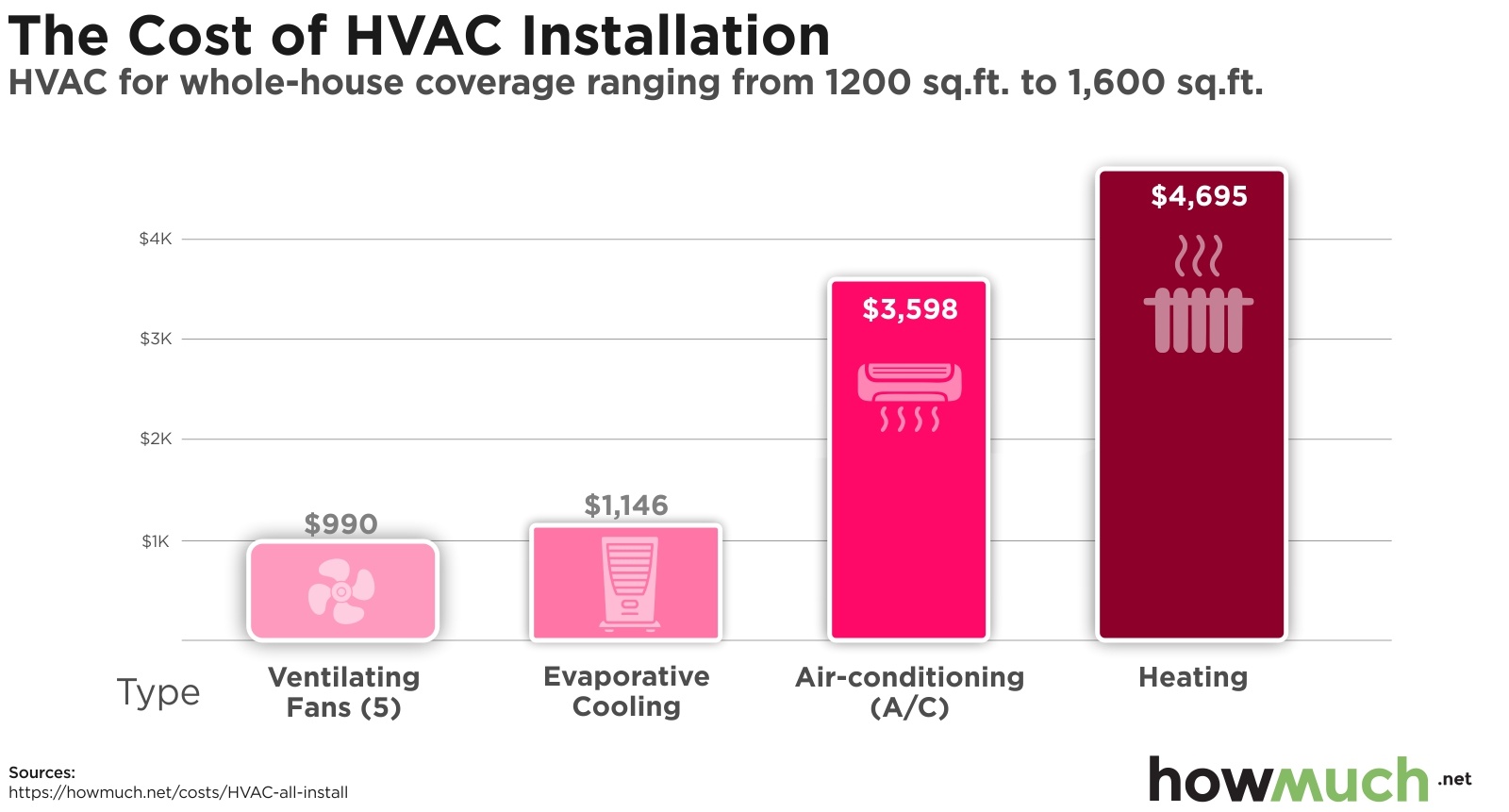
When budgeting for HVAC installation, it’s crucial to consider the additional costs that may arise beyond the initial purchase of the unit. These extra expenses can significantly impact the overall installation cost and should not be overlooked.
One of the major additional costs associated with HVAC installation is the installation or modification of ductwork. Proper ductwork is essential for ensuring efficient airflow and distribution of heated or cooled air throughout your home. The cost of ductwork installation or modifications can vary depending on the size of your home, the complexity of the duct system, and any repairs that may be needed.
Another important factor to consider is the cost of professional labor. Hiring skilled HVAC technicians to install your system is crucial for ensuring that the job is done correctly and efficiently. While it may be tempting to cut costs by attempting a DIY installation, improper installation can lead to costly repairs down the line.
Professional labor costs are a worthwhile investment in the long-term efficiency and performance of your HVAC system.
Don’t forget to account for any necessary permits or inspection fees that may be required for your HVAC installation. Depending on your location, you may need to obtain permits from your local government before installing a new HVAC system. Additionally, inspections may be necessary to ensure that your system meets building codes and safety standards.
These fees can add to the total cost of your HVAC installation, so it’s important to factor them into your budget from the start.

Proper maintenance of existing systems can help reduce the need for a full installation. Regular maintenance such as cleaning filters, checking for leaks, and ensuring proper airflow can extend the lifespan of your HVAC system and prevent costly repairs or replacements.
When you bundle HVAC installation with other home improvement projects like insulation upgrades or window replacements, you can often negotiate a better deal with contractors. This can result in overall cost savings and improved energy efficiency for your home.
Investing in energy-efficient upgrades for your HVAC system, such as installing a programmable thermostat or upgrading to a high-efficiency model, can lower long-term operating costs. While the initial investment may be higher, the energy savings over time can offset the upfront costs and lead to significant savings in the long run.